

VerifiedBiology

A-Level subject tutoring
$15/hour - Free 30-minute trial
A-Level Maths tutor online lessons give students one-to-one support matched to their qualification, exam board, current topics and weaker areas. Combo Tutors can support Pure Mathematics, Statistics, Mechanics, algebra, calculus and exam preparation across UK and international A-Level routes.
Find one-to-one tutors across Cambridge, Pearson Edexcel, AQA, OCR and IB courses, with matching based on the student's subject, qualification and current stage.
Trusted by 10K+ students & families


1 / 25
AQA, Pearson Edexcel, OCR and Cambridge International each structure their A-Level Maths papers differently. Tutoring is matched to the exact board and paper route before lessons begin.
7357
Three papers: Paper 1 (Pure), Paper 2 (Pure and Mechanics) and Paper 3 (Pure and Statistics), each 2 hours and worth 100 marks. A calculator is permitted in all three papers.
9MA0
Three papers: Paper 1 and Paper 2 cover Pure Mathematics, and Paper 3 combines Statistics and Mechanics, each 2 hours and worth 100 marks. Paper 1 is non-calculator; a calculator is permitted in Papers 2 and 3.
H240
Three components: Component 1 (Pure Mathematics), Component 2 (Pure Mathematics and Statistics) and Component 3 (Pure Mathematics and Mechanics), each 2 hours and worth 100 marks. Component 1 is non-calculator; a calculator is permitted in Components 2 and 3.
9709
A modular structure where students combine a Pure Mathematics paper with Mechanics and/or Probability & Statistics papers depending on their chosen route, currently examined through the 2026 and 2027 series.
One-to-one A-Level Maths tutoring starts from $15 per hour where the current pricing applies. The confirmed rate depends on tutor fit and level and is shared before regular lessons begin.
New students can start with a free 30-minute trial.
Tutors explain challenging topics clearly and support progress over time.
Official specifications, exam-style questions and past papers build technique.
Tutors are reviewed through interviews, teaching evaluation and approval.
Subject, level, qualification and exam board shape every recommendation.
The student does the mathematical thinking. The tutor provides structure, explanation and carefully chosen practice matched to the exact course.
Step 1
We start with feedback, a mock or a past-paper question and confirm the qualification, exam board and current priority.
Step 2
The tutor distinguishes knowledge, algebra, method choice, modelling, interpretation and timing issues.
Step 3
The lesson repairs the underlying skill with a clear explanation and carefully chosen A-Level examples.
Step 4
The student uses the idea on a question from the exact course and paper route they are preparing for.
Step 5
A changed question checks whether the student can transfer the method instead of following a familiar pattern.
Step 6
The lesson ends with a clear next step so the student and family know what to practise next.
What we cover
Break the specification into manageable topics, then build confidence from the first concept to exam-ready application.
Algebra, functions, trigonometry, differentiation, integration, sequences and series, vectors and coordinate geometry. The exact topic mix depends on the qualification and current stage.
Probability, distributions, sampling, hypothesis testing, data interpretation and communicating conclusions clearly.
Kinematics, forces, Newton's laws, moments, modelling and interpreting physical situations mathematically where Mechanics forms part of the student's route.
Tutoring can identify prerequisite gaps in algebra, graphs, trigonometry or equation manipulation, repair them and return to the current A-Level application.
See this plan built around your child's exact paper.
Book Free Demo
Free
30-minute trial
Break down knowns, unknowns and method choices, then change the question to build transfer and multi-step reasoning.
Repair the specific prerequisite skill and return to the A-Level application rather than repeating disconnected exercises.
Compare question signals and method choices so the student can decide how to begin independently.
Build the physical model and diagram before forming equations.
Practise interpreting results and explaining the mathematics clearly in context.
Improve accuracy and practise efficient routes under timed conditions.
Change the question and build independent decisions rather than relying on memorised patterns.
Family trust
A clear tutor match, a plan built around the real paper, and progress parents can follow from week to week.
We shortlist tutors who know the curriculum, teach clearly, and can coach the exact exam habits that lift marks.
Top-university academics and exam-savvy specialists.
Parents see what was covered, what improved, and what needs attention next, so progress never feels vague.
Structured feedback after every lesson block.
Sessions are matched to the student's board, tier, topic gaps, and exam timeline instead of generic subject tutoring.
Board-specific support with a measurable target grade path.
Meet your recommended tutor in a private one-to-one trial. Share your child’s current priorities, see how the tutor teaches, and decide whether the fit feels right before booking regular lessons. No credit card. No commitment.
Quick questions
Helpful answers about exam boards, syllabus topics, tutor matching and lesson support.
A-Level Maths tutor prices vary by tutor experience, qualification, format and platform. Combo Tutors Academy starts from $15 per hour, with the confirmed rate shared before regular lessons begin.
Tutor matching can consider AQA, Pearson Edexcel, OCR and Cambridge International where supported. The student's exact qualification and paper route are confirmed before matching.
AQA assesses across three papers that all allow a calculator. Pearson Edexcel and OCR also use three papers, but the first paper in each is non-calculator. Cambridge International uses a modular structure, where students combine a Pure Mathematics paper with Mechanics and/or Statistics papers depending on their route. Tutoring is matched to the student's exact board before lessons begin.
Yes. Lessons can cover past papers, timing, unfamiliar questions, method selection, mathematical communication and recurring exam errors.
Yes, where those components form part of the student's qualification. The exact paper route should be confirmed first.
The right frequency depends on the student's current level, exam timeline and goals. Some students use weekly lessons throughout the course, while others need short-term support around mocks or final exams.
Yes. Earlier gaps in algebra, graphs or trigonometry can affect A-Level progress. A tutor can identify the underlying prerequisite and repair it before returning to the current topic.
The trial can be used to discuss the qualification, exam board, current topics and where the student is struggling. It also gives the family a chance to assess tutor fit before booking regular lessons.
Yes, you can speak with the academic advisor about a rematch if the first tutor is not the right fit.
Explore the curriculum
Browse subject-specific tutoring with the same board-aware matching and focused exam support.
Students studying multiple A-Level subjects can also explore A-Level Physics, Chemistry, Economics, Computer Science and Further Maths tutoring, plus broader online Maths tutoring.
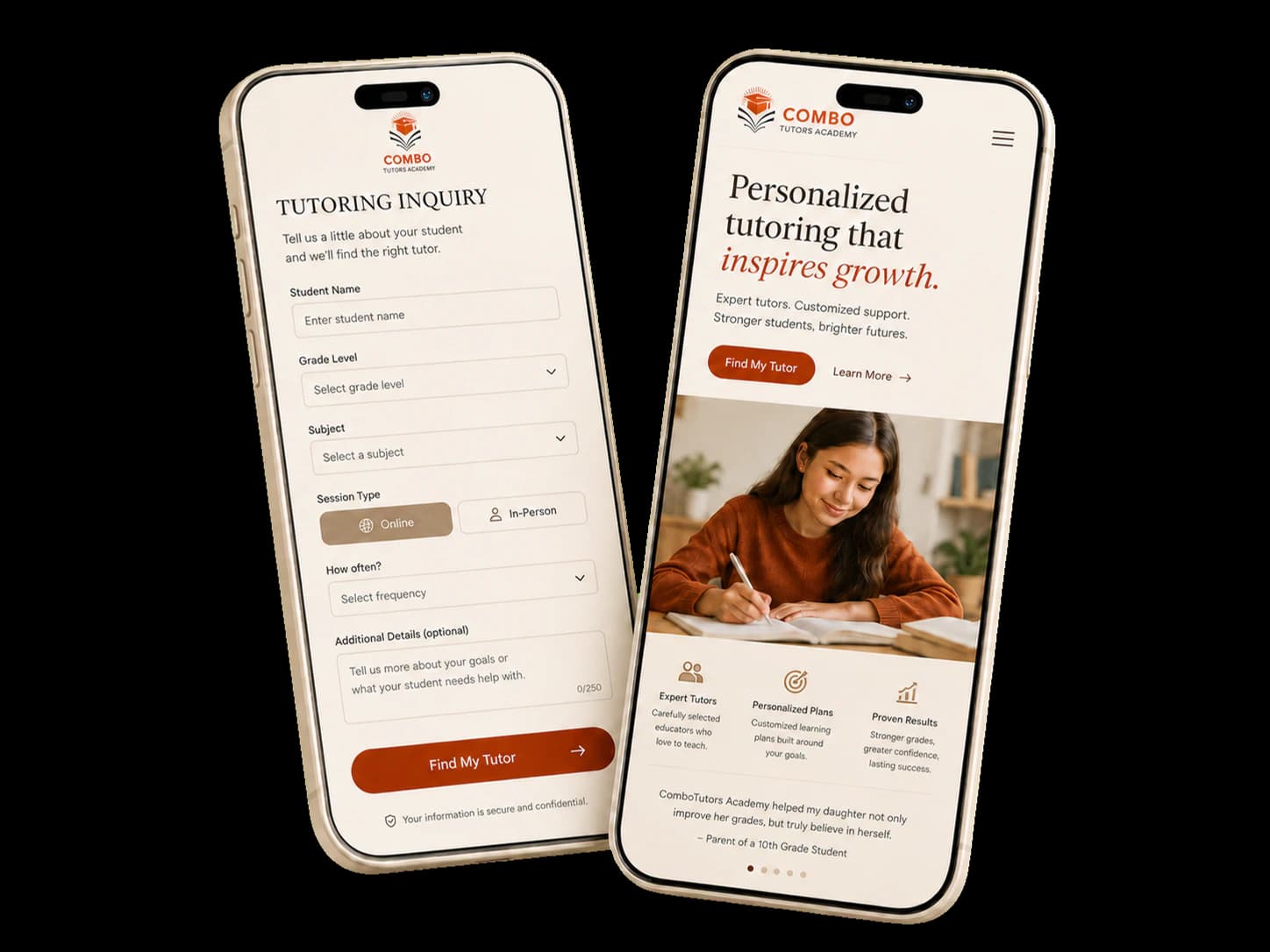
Book a free consultation and we will match you with a specialist A-Level Maths Tutor Online for AQA, Edexcel, OCR & Cambridge tutor who can make a real difference.