

VerifiedBiology

A-Level subject tutoring
$15/hour - Free 30-minute trial
Expert 1-on-1 A-Level Biology tutoring for AQA, Edexcel, OCR, and CIE. Master genetics, physiology, and essay technique — and reach Grade A or A*.
Find one-to-one tutors across Cambridge, Pearson Edexcel, AQA, OCR and IB courses, with matching based on the student's subject, qualification and current stage.
Trusted by 10K+ students & families

1 / 25
Tutors are chosen for academic background, subject expertise and clear explanations.
Lessons use specifications, mark schemes and past-paper practice where relevant.
Tutors complete interviews, teaching checks and our internal review process.
Students are matched by subject, qualification and exam board.
Our tutors build deep understanding from the molecular level up — ensuring students can handle both the factual recall and the analysis questions that determine A-grade outcomes.
Step 1
We start with recent written or data-response work and confirm the exam board and current topic.
Step 2
The tutor distinguishes knowledge gaps from weak synoptic links, data interpretation, or (AQA) essay depth.
Step 3
The lesson rebuilds a concept map linking topics, or essay technique for the AQA Paper 3 essay.
Step 4
The student applies the skill to a past-paper question or dataset from their board.
Step 5
A different experimental scenario checks whether the skill transfers to unfamiliar data.
Step 6
The lesson ends with the next priority for the following lesson.
What we cover
Work through the specification from molecular biology to ecosystems, connecting knowledge to data and exam-ready application.
Carbohydrates, lipids, proteins, DNA, RNA, water — structure, properties, and biological functions. Enzyme kinetics and the effects of inhibitors.
Prokaryotic and eukaryotic cell structure, cell organelles and their functions, the cell membrane, cell signalling, and cell division (mitosis and meiosis).
Gas exchange surfaces (lungs, fish gills, leaves), the mammalian heart and double circulation, blood vessels, haemoglobin, and transport in plants (xylem, phloem, transpiration).
DNA replication, transcription and translation, gene mutations, gene expression, inheritance (monohybrid, dihybrid, linkage, sex-linkage), and Hardy-Weinberg equilibrium.
Photosynthesis (light-dependent and light-independent reactions), respiration (glycolysis, Krebs cycle, oxidative phosphorylation), and the relationship between the two.
The nervous system, synaptic transmission, sensory receptors, muscle physiology, the endocrine system, homeostasis (temperature, blood glucose), and the kidney.
Population genetics, natural selection, speciation, ecological relationships, energy flow through ecosystems, and the impact of human activity on biodiversity.
See this plan built around your child's exact paper.
Book Free Demo
Free
first lesson, no commitment
The AQA Paper 3 essay (worth 25 marks) rewards biological depth, accurate use of terminology, and synoptic breadth — not just describing a topic. We practise writing essays on past titles with the mark scheme criteria explicitly in mind.
Higher-mark questions in all specifications require students to connect topics across the full course. We build 'concept maps' that show how topics link — e.g., how DNA connects to protein synthesis, enzyme action, cell division, and variation — making synoptic answers feel natural.
A-Level Biology papers include a high proportion of data analysis and experimental interpretation questions. We practise reading graphs, identifying trends, suggesting explanations, and evaluating methodology — skills that are separate from content knowledge.
Family trust
A clear tutor match, a plan built around the real paper, and progress parents can follow from week to week.
Tutors know exactly what 'biological depth and breadth' means in the mark scheme.
Practised against real past essay titles.
Linking DNA to protein synthesis, enzyme action and cell division makes synoptic questions feel natural instead of random.
Built across the full specification.
Reading graphs, evaluating method and drawing conclusions are treated as a distinct, practisable skill.
A dedicated focus alongside content revision.
Verified IGCSE feedback
Focused, one-to-one support that helps students understand difficult topics and prepare with confidence.
Meet your recommended tutor in a private one-to-one trial. Share your child’s current priorities, see how the tutor teaches, and decide whether the fit feels right before booking regular lessons. No credit card. No commitment.
Quick questions
Helpful answers about exam boards, syllabus topics, tutor matching and lesson support.
AQA Paper 3 includes a choice of two essay titles worth 25 marks. Essays are marked for biological content (up to 16 marks), breadth of knowledge across the specification, quality of written communication, and use of relevant examples. We practise essays on all past titles.
Content knowledge is necessary but not sufficient for A/A* grades. Higher-mark questions require application to novel experimental scenarios, analysis of data, and synoptic connections between topics. Our sessions build both the knowledge base and the analytical skills.
Practical skills are assessed through questions in all three written papers. These include designing experiments, calculating from data (rates, percentages, statistical tests), interpreting graphs, and evaluating methodology. We cover all of these in sessions.
Yes — genetics (inheritance, gene expression, mutation, population genetics) and molecular biology (DNA replication, transcription, translation, protein structure) are among our strongest areas. These topics connect the whole A-Level Biology course and are worth preparing in depth.
Explore the curriculum
Browse subject-specific tutoring with the same board-aware matching and focused exam support.
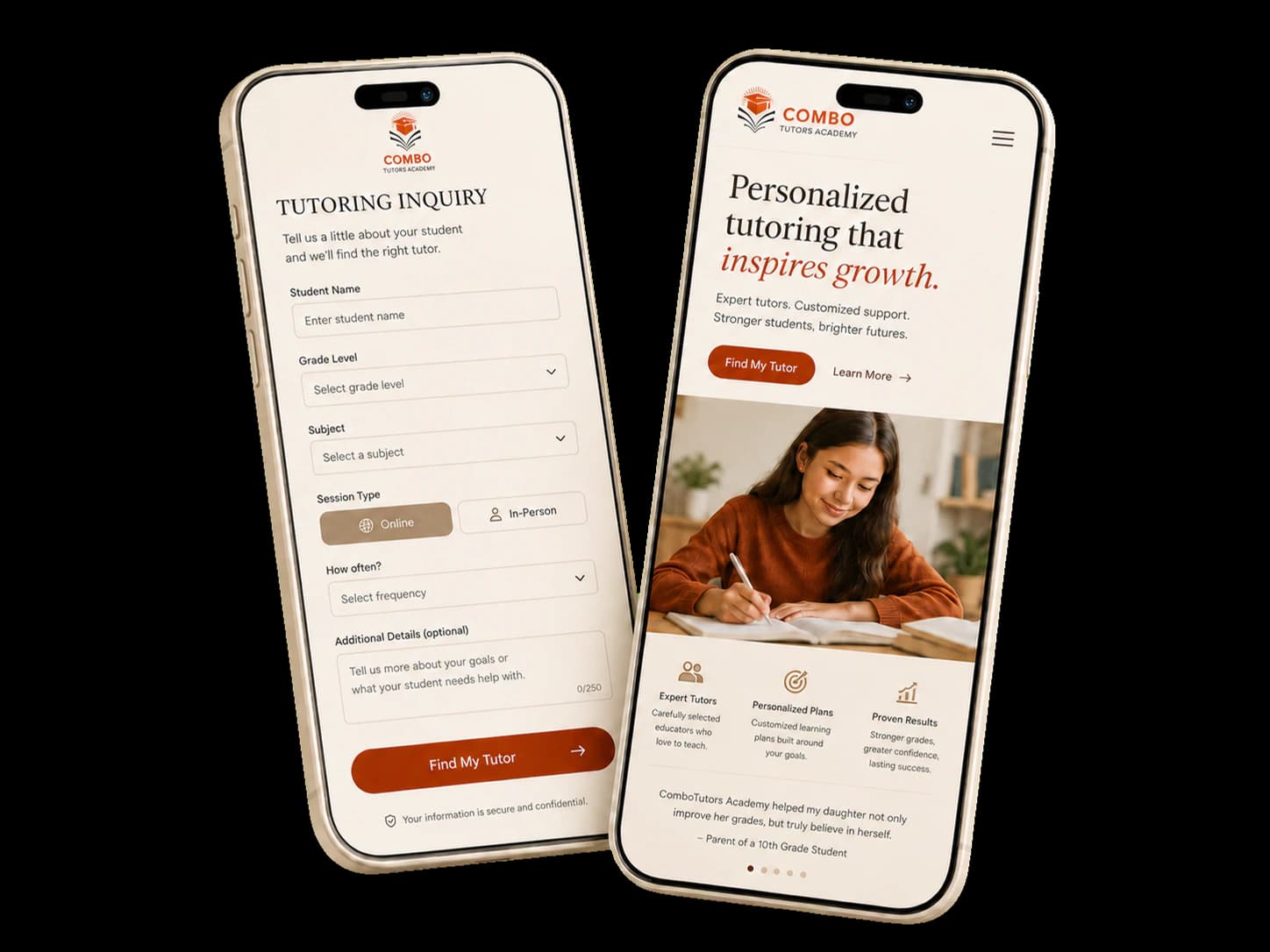
Book a free consultation and we will match you with a specialist A-Level Biology Tutor Online for AQA, Edexcel, OCR & CIE tutor who can make a real difference.