
Standard Level
SL tutoring can focus on securing the core physical concepts, improving calculations, strengthening Paper 1 and Paper 2 performance and supporting the Scientific Investigation.
IB subject tutoring
$15/hour - Free 30-minute trial
IB Physics is not difficult only because of the amount of content. Students often lose marks when they need to choose the right physical model, connect equations, complete multi-step calculations, interpret unfamiliar data or explain their reasoning clearly under exam conditions. We match one-to-one tutors to Standard Level or Higher Level, Paper 1A, Paper 1B, Paper 2, and ethical Scientific Investigation guidance.
Tutors matched by HL or SL, main teaching strengths, and Scientific Investigation experience. Only verified qualifications and experience are published.
 IB Physics Examiner
Dr Thomas Ellis
Cambridge PhD Astrophysics · IB Examiner
IB Physics HL and SL, A-Level Physics (all boards)
Avg +1.9 grade improvement
 Wave Physics Specialist
Ms Nadia Kowalska
Warsaw University MSc Physics · IB Teacher
IB Physics SL and HL — waves, electricity, and nuclear
87% of students reach Grade 6+
 IA & Practical Specialist
Mr Rajan Mehta
Imperial MSc Physics
IB Physics HL and SL, uncertainty analysis, internal assessment
Average IA score: 21/24
Doing more questions is not always the answer. The first step is identifying why marks are being lost.
| Student difficulty | Likely issue | Tutor focus |
|---|---|---|
| Knows formulas but cannot start unfamiliar questions | Weak modelling | Identify the physics before choosing equations |
| Calculations break down halfway through | Weak multi-step reasoning | Organise working and connect relationships |
| Paper 1 mistakes repeat | Misconceptions or rushed decisions | Diagnose concept gaps and improve accuracy |
| Graphs and experimental data feel difficult | Weak interpretation | Analyse patterns, gradients, uncertainty and meaning |
| Uses equations without understanding them | Procedural learning | Connect mathematics to physical reasoning |
| Long explanations miss marks | Imprecise scientific language | Strengthen explanation and justification |
| HL topics feel disconnected | Weak conceptual links | Connect forces, energy, particles and models |
| Scientific Investigation feels unclear | Weak research design | Ethical support with method, data and evaluation |
| Runs out of time | Inefficient exam strategy | Timed practice and question prioritisation |
Paper 1 requires both speed and understanding. The aim is not simply to complete more questions — tutors can identify recurring mistakes, correct the underlying reasoning and then ask the student to apply the same idea to a different problem.
A tutor can review a student's recent answer, identify where the reasoning failed, and then practise the same skill through a fresh IB-style question.
The Scientific Investigation is the student's own assessed research work. Tutors can provide academic guidance while keeping the investigation independent.
Combo Tutors does not write, rewrite, fabricate data or complete assessed Scientific Investigation work for students. The investigation, data and final academic decisions must remain the student's own.
SL tutoring can focus on securing the core physical concepts, improving calculations, strengthening Paper 1 and Paper 2 performance and supporting the Scientific Investigation.
HL students work at greater mathematical and conceptual depth and encounter more demanding applications. HL tutoring can focus on difficult multi-step problems, advanced topics and connections across different parts of the course.
A good tutor match depends on more than choosing someone who teaches Physics. This helps us recommend a tutor suited to the student's actual academic priorities.
One-to-one IB Physics tutoring starts from $15 per hour where current pricing applies. The confirmed rate can depend on tutor, level, lesson frequency, specialist requirements and availability.
Families receive the confirmed price before regular lessons begin.
Tutors explain challenging topics clearly and support progress over time.
Official specifications, exam-style questions and past papers build technique.
Tutors are reviewed through interviews, teaching evaluation and approval.
Subject, level, qualification and exam board shape every recommendation.
Lessons do not need to move through every theme in sequence. The tutor can prioritise the topics currently affecting school assessments, mocks and final-exam performance.
Step 1
Start with a recent test, homework task, mock or past-paper response and confirm HL or SL.
Step 2
Identify whether marks are being lost because of concept gaps, mathematical errors, weak modelling, poor data interpretation, experimental reasoning, explanation, or exam timing.
Step 3
Clarify the physics behind the mistake.
Step 4
Move into a new IB-style calculation, graph, experimental scenario or problem.
Step 5
Review the student's reasoning and identify remaining errors.
Step 6
The student solves a similar problem independently.
Step 7
The next lesson focuses on the highest-value weakness, keeping lessons targeted instead of simply adding more study hours.
What we cover
The current IB Physics course is organised into five broad themes. Lessons do not need to move through every theme in sequence.
Kinematics, forces, momentum, energy and related mechanics.
Thermal physics, gases, and circuits.
Oscillations, wave models, interference and standing waves.
Gravitational, electric and magnetic fields, motion in fields, and induction.
Atomic models, radioactive decay, nuclear processes, and quantum ideas — with HL-specific depth.
See this plan built around your child's exact paper.
Book Free DemoFamily trust
A clear tutor match, a plan built around the real paper, and progress parents can follow from week to week.
Tutor matching considers Physics expertise, IB experience and HL or SL level.
Students can work on selecting the right approach, structuring calculations and solving unfamiliar problems.
Concept teaching moves into Paper 1, Paper 2 and IB-style application.
Tutoring can strengthen graph interpretation, uncertainty, practical reasoning and analysis.
Students receive support understanding the Scientific Investigation without outsourcing assessed work.
If the initial tutor is not the right fit, another suitable specialist can be recommended.
Verified IGCSE feedback
Focused, one-to-one support that helps students understand difficult topics and prepare with confidence.
Meet your recommended tutor in a private one-to-one trial. Share your child’s current priorities, see how the tutor teaches, and decide whether the fit feels right before booking regular lessons. No credit card. No commitment.
Quick questions
Helpful answers about exam boards, syllabus topics, tutor matching and lesson support.
Online IB Physics tutoring starts from $15 per hour where current pricing applies. The confirmed rate depends on the tutor, level and lesson requirements.
Yes. Tutor matching considers whether the student studies Physics at Higher Level or Standard Level.
Yes. Lessons can focus on multiple-choice accuracy, calculations, data interpretation, experimental scenarios and timed practice.
Yes. Tutors can work on multi-step calculations, extended problems, physical reasoning, graphs and data-based questions.
Yes. Tutors can help students identify the correct model, select equations, organise working and solve multi-stage quantitative problems.
Yes. Students can receive support interpreting graphs, gradients, measurements, experimental data and uncertainty.
Tutors can provide ethical guidance on research questions, methods, measurements, uncertainty, data analysis and evaluation. They do not write or complete assessed work.
Yes. Focused mock or final-exam preparation can be arranged depending on tutor availability.
Explore the curriculum
Browse subject-specific tutoring with the same board-aware matching and focused exam support.
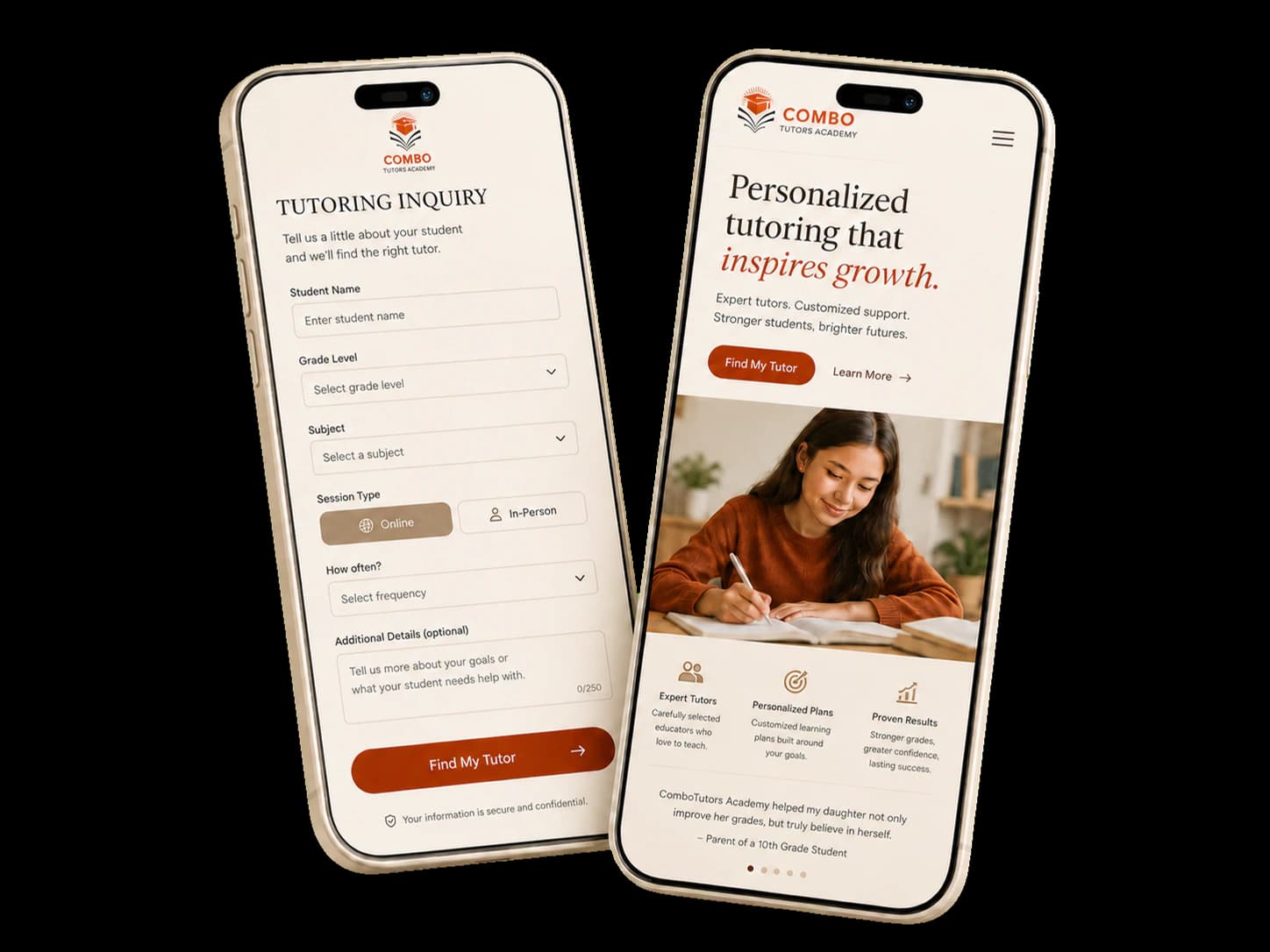
Book a free consultation and we will match you with a specialist Online IB Physics Tutors for HL and SL Students tutor who can make a real difference.