

VerifiedBiology

A-Level subject tutoring
$15/hour - Free 30-minute trial
Expert 1-on-1 A-Level Computer Science tutoring for AQA and OCR. Master algorithms, programming, and computational thinking with qualified UK tutors — and reach Grade A or A*.
Find one-to-one tutors across Cambridge, Pearson Edexcel, AQA, OCR and IB courses, with matching based on the student's subject, qualification and current stage.
Trusted by 10K+ students & families
1 / 25
Tutors understand the subject deeply and teach at the required level.
Specifications, past papers and assessment requirements guide lesson planning.
Each tutor completes our review and teaching-assessment process.
We consider the board, qualification, level and learning needs.
Our tutors build fluent programming skills alongside the theory examiners reward — the combination of confident coding and precise written explanation is what produces A and A* grades in Computer Science.
Step 1
We start with recent code or a past-paper theory question and confirm the exam board and current topic.
Step 2
The tutor distinguishes coding implementation gaps from written theory technique or NEA progress issues.
Step 3
The lesson pairs an algorithm with hands-on coding, or builds mark-scheme-precise written answers.
Step 4
The student applies the skill to a program to write or a past-paper theory question.
Step 5
A different problem checks whether the algorithm or concept transfers, not just a memorised solution.
Step 6
The lesson ends with the next data structure, theory topic, or NEA milestone.
What we cover
Work through theory and programming together, so algorithms are understood on paper and fluently implemented in code.
Data types, variables, sequence, selection and iteration, subroutines, arrays, records, string handling, and file operations — usually in Python, C#, VB.NET, or Java depending on your centre.
Stacks, queues, linked lists, trees, graphs and hash tables, plus searching (linear, binary), sorting (bubble, merge, quick), and graph/tree traversal algorithms.
Decomposition, abstraction, pattern recognition, and problem-solving — including thinking ahead, procedurally, logically, and concurrently as tested in the written papers.
Binary, hexadecimal, two's complement, floating point, normalisation, character sets, bitwise operations, and compression, encryption and hashing.
The CPU and fetch-execute cycle, Von Neumann architecture, registers, addressing modes, assembly language (Little Man Computer / LMC), and system software.
The TCP/IP stack, network topologies, protocols, client-server and web technologies, SQL, relational database design, normalisation, and transaction processing.
Big-O complexity, finite state machines, regular expressions, Reverse Polish Notation, Turing machines, and the limits of computation — a major discriminator at A*.
Ethical, legal, cultural, and environmental impacts of technology — the extended-response morality and law questions that many students under-prepare for.
See this plan built around your child's exact paper.
Book Free Demo
+1.7
average grade improvement
Students often understand an algorithm on paper but struggle to implement it. We pair every theory topic with hands-on coding — tracing then writing merge sort, a stack, or a binary tree — so the concept and the code reinforce each other and both exam papers are covered at once.
The programming project is worth up to 20% and derails students who pick an unsuitable problem or leave it late. We help scope a project that hits the top mark band, build it in stages, and evidence the analysis, design, and testing the mark scheme demands — without ever writing it for you.
The most abstract topics — complexity, finite state machines, and Turing machines — separate A from A*. We teach them with concrete worked examples and past-paper drills using the exact mark-scheme language each board expects, so these high-value marks become reliable.
Family trust
A clear tutor match, a plan built around the real paper, and progress parents can follow from week to week.
Exam success needs both fluent code and precise written explanation, so we build both together.
Algorithms taught, then implemented, in the same lesson.
We help scope and structure a top-band project without ever writing it for you.
Analysis, design and testing evidenced properly.
Big-O, finite state machines and Turing machines are taught with worked examples, not just definitions.
The topics that most often separate A from A*.
Verified IGCSE feedback
Focused, one-to-one support that helps students understand difficult topics and prepare with confidence.
Meet your recommended tutor in a private one-to-one trial. Share your child’s current priorities, see how the tutor teaches, and decide whether the fit feels right before booking regular lessons. No credit card. No commitment.
Quick questions
Helpful answers about exam boards, syllabus topics, tutor matching and lesson support.
It depends on your centre and board. AQA and OCR accept several languages including Python, C#, Java, VB.NET, and C++. Python is the most common in schools, but our tutors are fluent across all the major languages and will support whichever one your centre has chosen for the exam and NEA.
The Non-Exam Assessment is worth 20% for both AQA (7517) and OCR (H446). It is a substantial programmed solution with an accompanying report covering analysis, design, development, testing, and evaluation. We help you scope, structure, and evidence it to hit the top mark band — while keeping it entirely your own work, as the exam board requires.
AQA (7517) includes an on-screen programming exam (Paper 1) with a pre-released Skeleton Program, while OCR (H446) assesses programming only in writing across two theory papers. OCR places more weight on written algorithm design and computational methods. We match you with a tutor who specialises in your exact specification.
It is not compulsory but is highly recommended, and many top universities expect it for a Computer Science degree. There is meaningful mathematical content — Boolean algebra, complexity, number systems, and logic. If you are not taking Maths, we can shore up the specific mathematical skills the A-Level requires.
Absolutely — that imbalance is the single most common issue we see. We diagnose which side is holding your grade back and focus there, whether that means translating theory into working code, or teaching confident programmers how to write the precise, mark-scheme-friendly answers the theory papers reward.
Explore the curriculum
Browse subject-specific tutoring with the same board-aware matching and focused exam support.
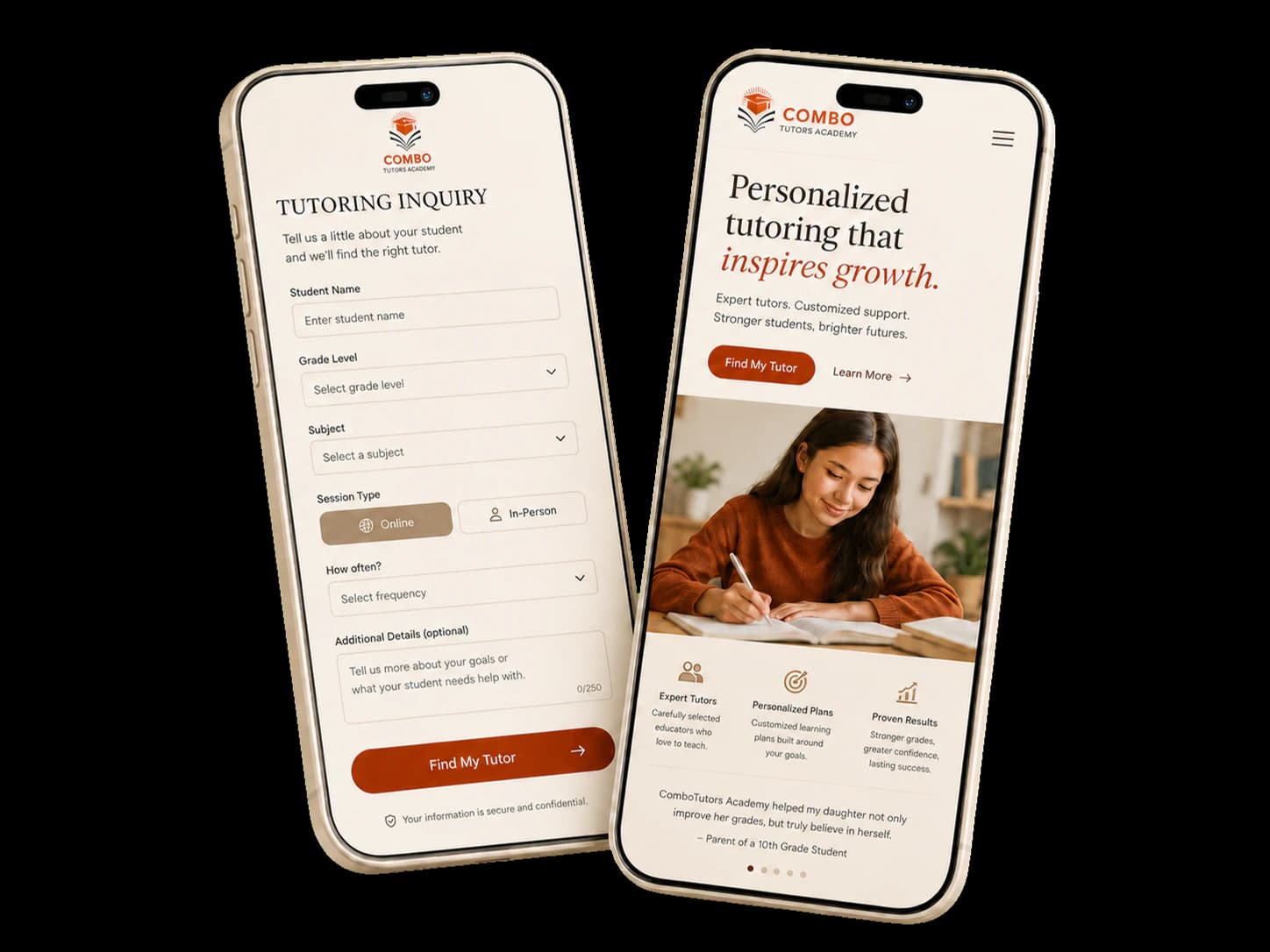
Book a free consultation and we will match you with a specialist A-Level Computer Science Tutor Online for AQA & OCR tutor who can make a real difference.